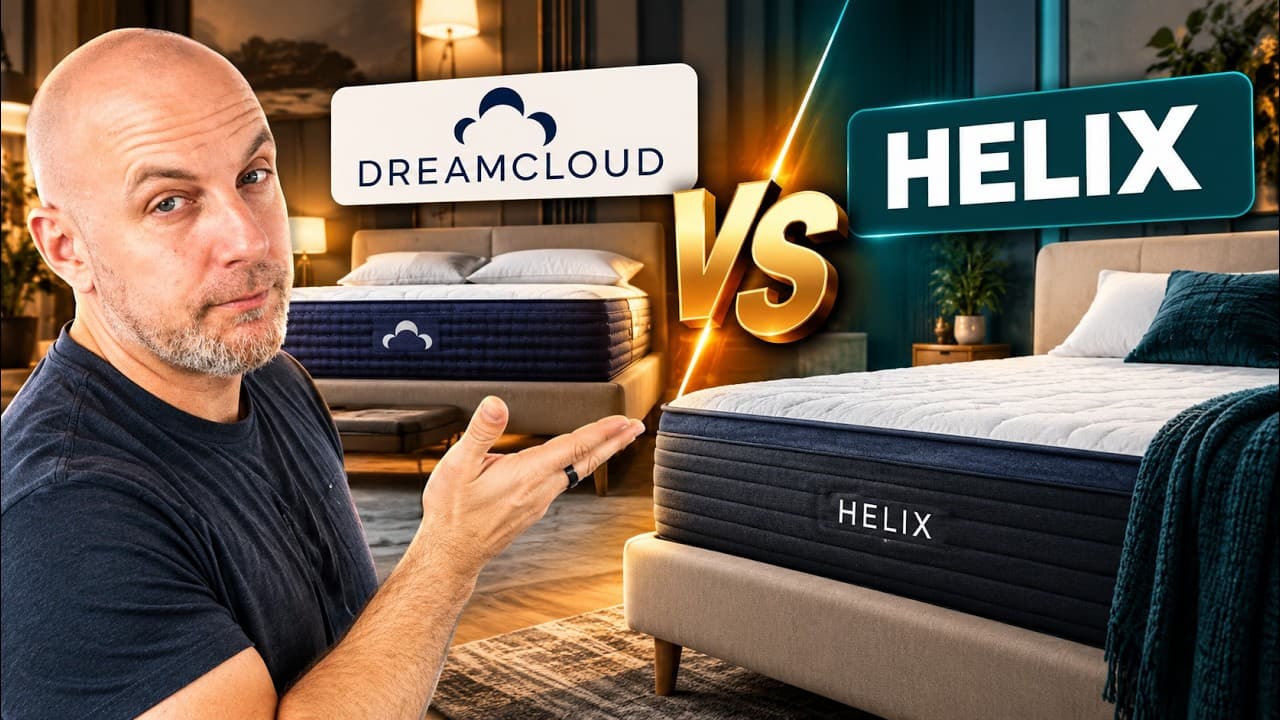
For a child aged 3 to 12 and under 120 lb, the Helix Kids is the clear pick. For an adult replacing a failed bed, DreamCloud is the better buy of the two, mainly for its price and 365-night trial.
- The Helix bed with full lab measurements is the Helix Kids: an 8-inch flippable hybrid for kids under 120 lb.
- DreamCloud queen hybrids ran from about $700 (Classic) to about $2,100 (Ultra) on sale at the time of review.
- DreamCloud offers a 365-night trial; Helix's was 120 nights.
- Both warranties require sagging deeper than 1.5 inches to qualify.
Some of these are partner links; they cost you nothing extra. How we earn
On this page9 sections
If there's already a dip where your hip lands, you're shopping, and DreamCloud and Helix are two of the names that come up. Start with the money: about $700 gets a DreamCloud queen hybrid on sale, and about $600 gets a Helix Kids twin. Those look like competing prices, but they aren't, because the Helix twin is a child's mattress, and that one fact decides most of this comparison.
A note on scope: the only Helix mattress we have full lab measurements on is the Helix Kids, so that's the Helix in this comparison. For Helix's adult beds, see our Helix Midnight Luxe review.
Quick verdict
Buying for a child aged 3 to 12 and under 120 lb: Helix Kids, and it isn't close. Buying for yourself: of the two we have measurements on, DreamCloud, at about $700 for a queen with a full year to return it. Neither is for a baby under 12 months, who needs a firm, flat crib mattress that meets the federal safety standard.
The two beds
DreamCloud is a direct-to-consumer hybrid brand from Tampa with four main hybrids (Classic, Premier, Luxe and Ultra) plus a newer PressureSmart line, in adult sizes from twin to split king.
Helix started in New York in 2015 and now sits under the same parent company as Brooklyn Bedding. The Helix Kids is an 8-inch flippable hybrid: a firmer side for ages 2–7 and a slightly softer side for 8–12, in twin and full only, for kids under 120 lb. It isn't a crib mattress.
What they share: foam over individually wrapped coils, free shipping and free returns during the trial, CertiPUR-US foams with no fiberglass in current builds, an advertised lifetime warranty, constant sales, and measurements from the same lab (NapLab), which is what makes the numbers comparable.
Side by side
| Helix Kids | DreamCloud hybrid | |
|---|---|---|
| Who it's for | Kids 3–12, under 120 lb | Adults |
| Firmness | Side 1: 8/10, side 2: 7/10 | Classic about 6/10 |
| Sinkage (weighted drop) | Just under 2 in | Just under 2.5 in |
| Motion transfer | About 30% worse than average | About 21% better than average |
| Response time | 0.8 s (avg 0.4 s) | 0.3 s (avg 0.4 s) |
| Trial | 120 nights | 365 nights |
| Price (on sale) | About $600 for a twin | About $700 for a Classic queen |
Helix Kids: built for a growing body
The idea is two firmness levels in one bed: the firmer side for the little years, then flip it around age eight. To an adult, 8/10 and 7/10 sound like planks, but pediatric guidance for kids past the crib is medium-firm to firm, because a lighter body doesn't sink far enough to get support from a plush surface. It's GreenGuard Gold certified on top of CertiPUR-US, and the cover is water-repellent.
The trade-offs: motion transfer is about 30% worse than average, so a parent who lies down at bedtime and slips out later will be felt, and response is slow (0.8 seconds). Sizes are twin and full only, with no twin XL; if your child is 11 and already tall, buy an adult twin instead.
DreamCloud: the adult value pick
On the lab's numbers, motion transfer came in about 21% below average thanks to the wrapped coils, so a partner climbing in after a late shift doesn't send a wave across the bed. Response was fast, and the edge sank a little over 3 inches under seated weight against an average of 4.
The fine print: NapLab scored the Classic Hybrid 8.66/10, which put it in the bottom 49% of hybrids it has tested. The Classic is about 6/10 firm with a thinner-than-average comfort layer; if your shoulder needs somewhere to go, look at the Premier, Luxe or Ultra. Sinkage was deeper than average, which can matter for heavier sleepers, and it ran a couple of degrees warm.
Queen prices on sale at the time of review: Classic about $700, Premier about $1,100, Luxe about $1,600 (14 inches, zoned for hip or lower back pain), Ultra about $2,100 (15 inches, more cooling, five-zone support). DreamCloud takes FSA and HSA payments and offers military, healthcare and first-responder discounts.
Warranty fine print, and why the trial matters more
DreamCloud's warranty requires sagging deeper than 1.5 inches, not caused by an improper foundation; replacement is free for 10 years, then $50 each way. Its own site shows 4.6 stars from nearly 9,000 reviews; Trustpilot showed 2.1 from 69 reviews, with recurring complaints about missed deliveries, slow support, early dips and denied claims. Helix's warranty also uses a 1.5-inch sagging threshold, and the company says 94% of claims through 2025 were approved, a figure no one outside the company has audited.
DreamCloud's parent settled an FTC case over "made in USA" claims and a class action over fiberglass in older mattresses; current models are sold as fiberglass-free. Both brands' discount percentages are set against list prices that tell you little, so compare checkout totals. Two practical rules: put either mattress on a proper foundation from day one, since improper support voids both warranties, and treat the trial, not the warranty, as your real protection.
Which to pick
- A child aged 3–12, under 120 lb: Helix Kids.
- A baby under 12 months: neither; buy a crib mattress that meets the federal standard.
- A child near 12 or over 120 lb: skip the kids bed and buy an adult twin.
- An adult: DreamCloud. Dedicated side sleepers should skip the Classic for the Premier, Luxe or Ultra.
Whichever you buy, put the last night of the trial in your calendar. If the bed starts dipping in month nine, return it rather than filing a claim.
Pros and cons
What works
- Helix Kids: two firmness levels that grow with a child.
- DreamCloud: low motion transfer, strong edges, fast response.
- DreamCloud's 365-night trial is well above the category norm.
- Both use CertiPUR-US foams with no fiberglass in current builds.
What doesn't
- Helix Kids transfers motion and responds slowly; twin and full only.
- DreamCloud Classic ranked in the bottom 49% of NapLab's hybrids and ran warm.
- Both warranties need more than 1.5 inches of sag to qualify.
- Discount percentages on both sites say little about the real price.
Frequently asked questions
Is Helix or DreamCloud better?
For a child aged 3 to 12 and under 120 lb, the Helix Kids. For an adult, DreamCloud was the better buy of the two beds we have lab measurements on.
How long are the trials?
DreamCloud offered 365 nights with free returns; Helix offered 120 nights at the time of review.
Can a baby sleep on the Helix Kids?
No. It isn't a crib mattress. Babies under 12 months need a firm, flat crib mattress that meets the federal safety standard.
What does the DreamCloud warranty require?
Sagging deeper than 1.5 inches that isn't caused by an improper foundation. Replacement is free for 10 years, then $50 each way.
Filed under
More in Mattress Reviews
 ReviewSaatva Review: What the Extra Money Actually BuysThe Saatva Classic tests among the best mattresses anywhere on day one. We itemize what the premium buys, where the year-two complaints cluster, and how to buy it safely.
 ComparisonSaatva vs Sealy: Online Luxury Bed or Try-It-in-Store Classic?We slept on both. Sealy lets you lie down in a store today at almost any budget; Saatva gives you a full year to test, a lifetime warranty and free setup.
 ReviewHelix Midnight Luxe Review: Does It Earn the 'Best Mattress' Title?We slept on the Helix Midnight Luxe for weeks and checked lab measurements: pressure relief, motion isolation, cooling, edge support, the bounce trade-off, and price.
 ReviewBear Elite Hybrid Review: A Mattress Built for Back PainWhy the Bear Elite Hybrid's zoned coils and medium-firm feel suit a sore lower back, how it's built, which firmness to choose, and what it costs.